Yoshinogari Site Audio Guide
Yoshinogari Historical Park, located between Kanzaki City and Yoshinogari Town in Saga Pre…
Tap a button to hear the section.
Overview
Overview
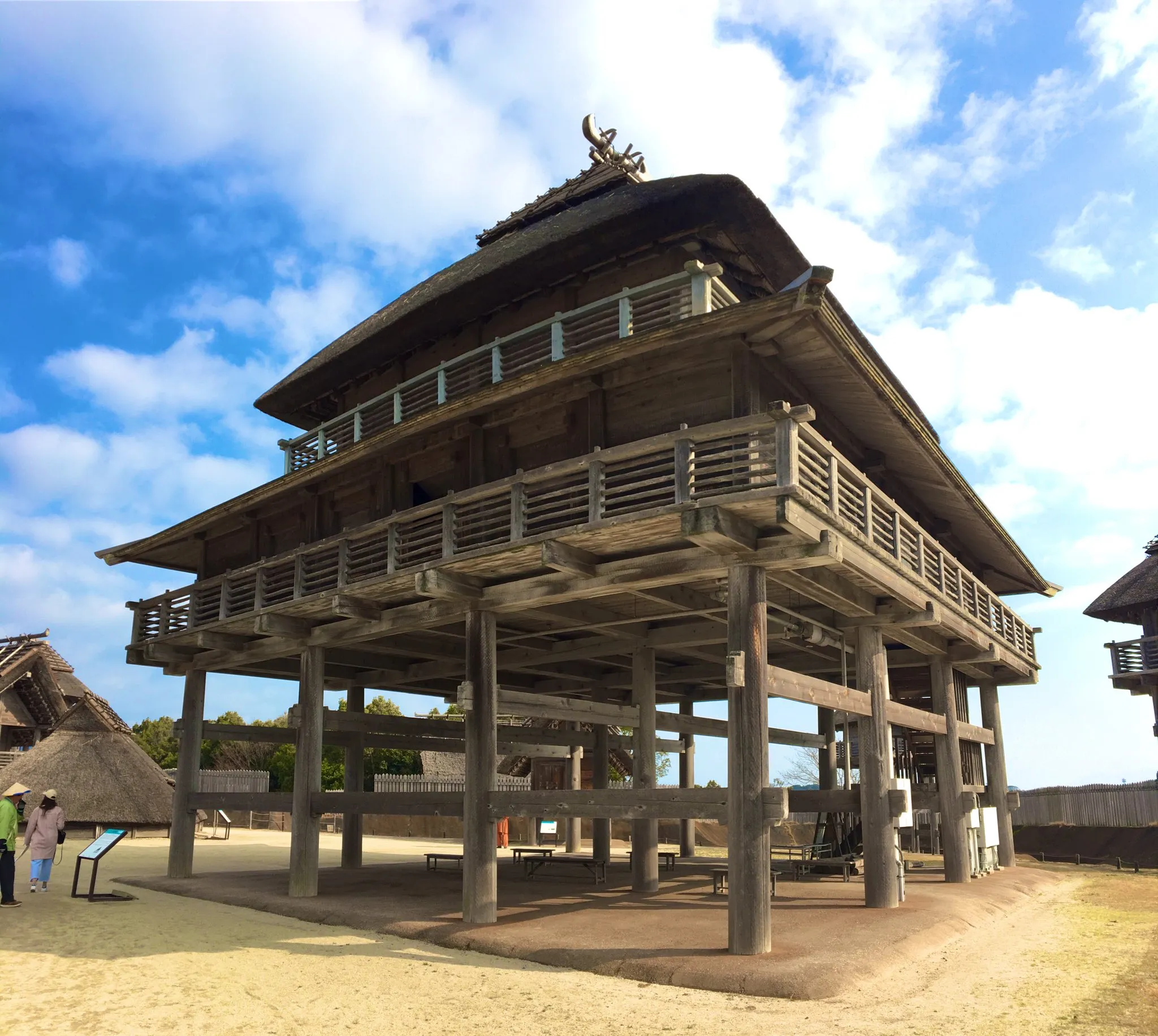
Yoshinogari Historical Park, located between Kanzaki City and Yoshinogari Town in Saga Prefecture, is one of Japan’s largest and most important archaeological sites from the Yayoi period. Covering about 50 hectares, the site features moats and earthen walls that once protected an ancient settlement—almost like a fortified castle from the Iron Age. Excavations have revealed watchtowers, high-floored storehouses, and relics suggesting a complex social system over 2,000 years ago. Today, the site has been beautifully reconstructed as a national historical park, allowing visitors to step into the daily life of Japan’s ancient ancestors
Access
Access
The site is easily accessible. It’s about a 15-minute walk from JR Yoshinogari-Kōen Station on the Nagasaki Line, or just a short bus ride away. By car, it takes roughly 30 minutes from Saga City or around an hour from Fukuoka via the expressway. The surrounding area offers rest stops, cafes, and local attractions, making it a comfortable day trip destination. After exploring the site, consider enjoying some local cuisine—Kurume ramen is a popular nearby treat
Parking
Parking
There are two main parking areas, located at the South and East gates of the park. Both are spacious and well-maintained, with facilities such as restrooms and vending machines. Parking costs 310 yen per day for regular cars. The South Gate is closest to the main exhibition area and reconstructed dwellings, while the East Gate offers access to the scenic walking paths and open green spaces
Highlights
Highlights
The highlight of Yoshinogari is its massive moated settlement, surrounded by earthen ramparts and watchtowers. Climb up to one of the towers for a panoramic view that truly evokes the feeling of an ancient fortified city. The northern inner enclosure, believed to be the ruler’s residence, showcases reconstructed ceremonial buildings that reveal the spiritual side of the Yayoi people. Visitors can walk among the elevated granaries and meeting halls, feeling the blend of community, defense, and daily life that defined this early Japanese society. The site’s scale and layout might even remind visitors of Odawara Castle—only from 2,000 years earlier