Nagoya Castle Audio Guide
Nagoya Castle in Chinzei Town, Karatsu City, Saga Prefecture, was built by Toyotomi Hideyo…
Tap a button to hear the section.
Overview
Overview
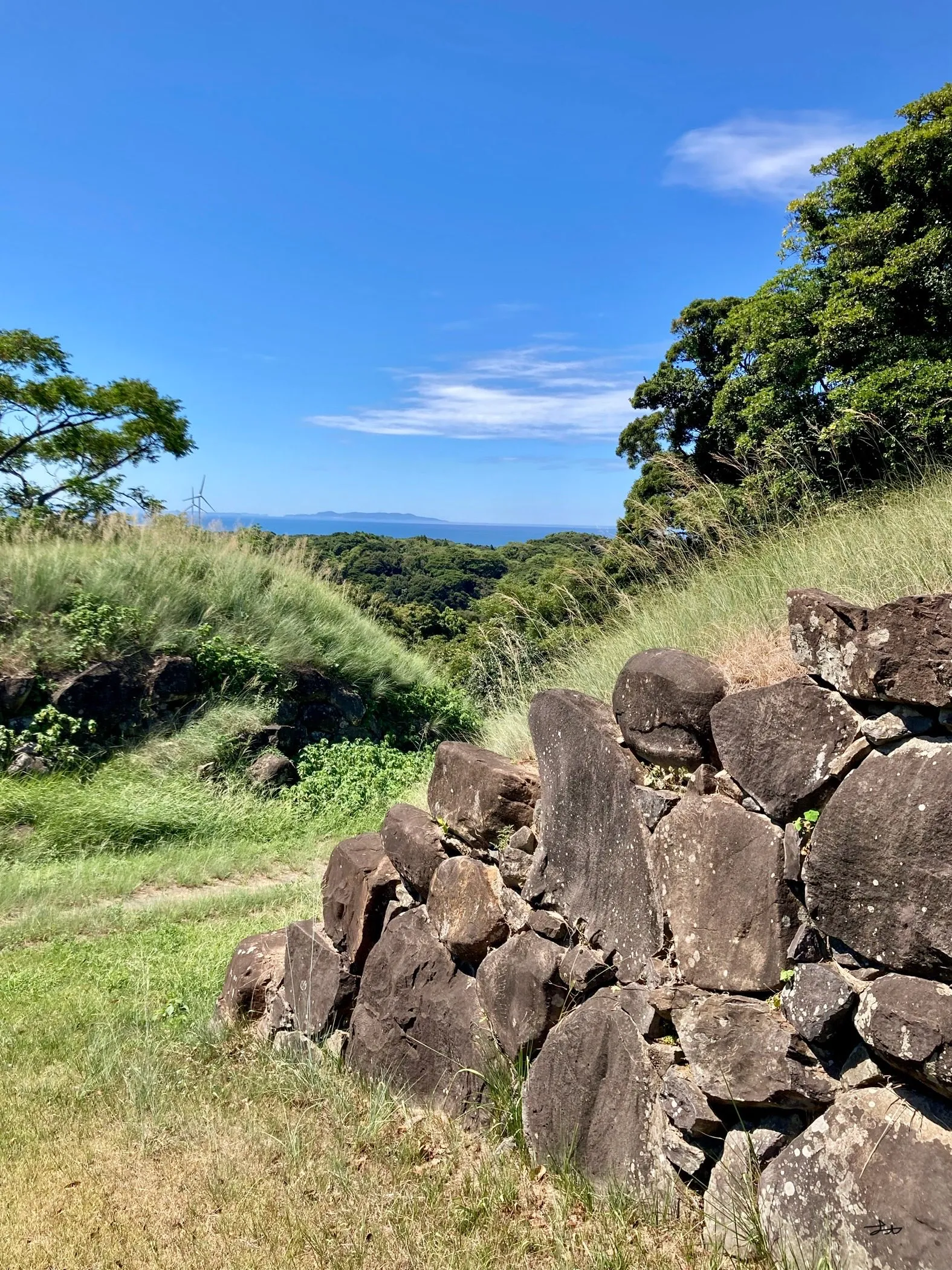
Nagoya Castle in Chinzei Town, Karatsu City, Saga Prefecture, was built by Toyotomi Hideyoshi as a grand stronghold for the invasion of Korea. Constructed in just six months, it is an astonishing example of large-scale stonework engineering from the late 16th century. Situated on a 90-meter hill overlooking the Genkai Sea, the ruins offer panoramic views that evoke the power and ambition of Hideyoshi’s era. Adjacent to the site is the Nagoya Castle Museum, which displays maps of over 130 daimyo encampments and exhibits related to the Korean campaigns—remarkably, admission is free
Access
Access
The castle is about a 30-minute drive northwest of Karatsu Castle. While the nearest station is Nishi-Karatsu on the JR Karatsu Line, public transportation options are limited, so driving is recommended. Set your GPS destination to ‘Nagoya Castle Museum’ for easy navigation. Along the route, you can stop at ‘Momo no Umi Tenkai-ichi’ roadside station to rest and pick up local products. You’ll also notice intersections named after famous samurai camps—a fun reminder of the many warlords who once gathered here
Parking
Parking
There is a spacious free parking lot next to the museum, large enough for buses. From the parking area, it’s about a five-minute walk to the main gate. Facilities such as restrooms and information boards are available near the entrance, making it easy to prepare for your castle walk. Comfortable shoes are recommended as the stone paths can be steep in places
Highlights
Highlights
The main attractions are the impressive stone walls and the spiral layout of the castle grounds, centered around the main bailey. From the eastern outwork, visitors can enjoy a sweeping view of the museum and entrance area. On the rear side, the ‘karameteguchi’ gate offers a scenic overlook toward Madarajima Island. The area once hosted over 130 daimyo residences, including those of Maeda Toshiie and Sanada Masayuki, earning it the nickname ‘the Olympic Games of the Sengoku period.’ Walking through these remains gives a true sense of the scale and drama of Japan’s unification campaigns