Kumamoto Castle Audio Guide
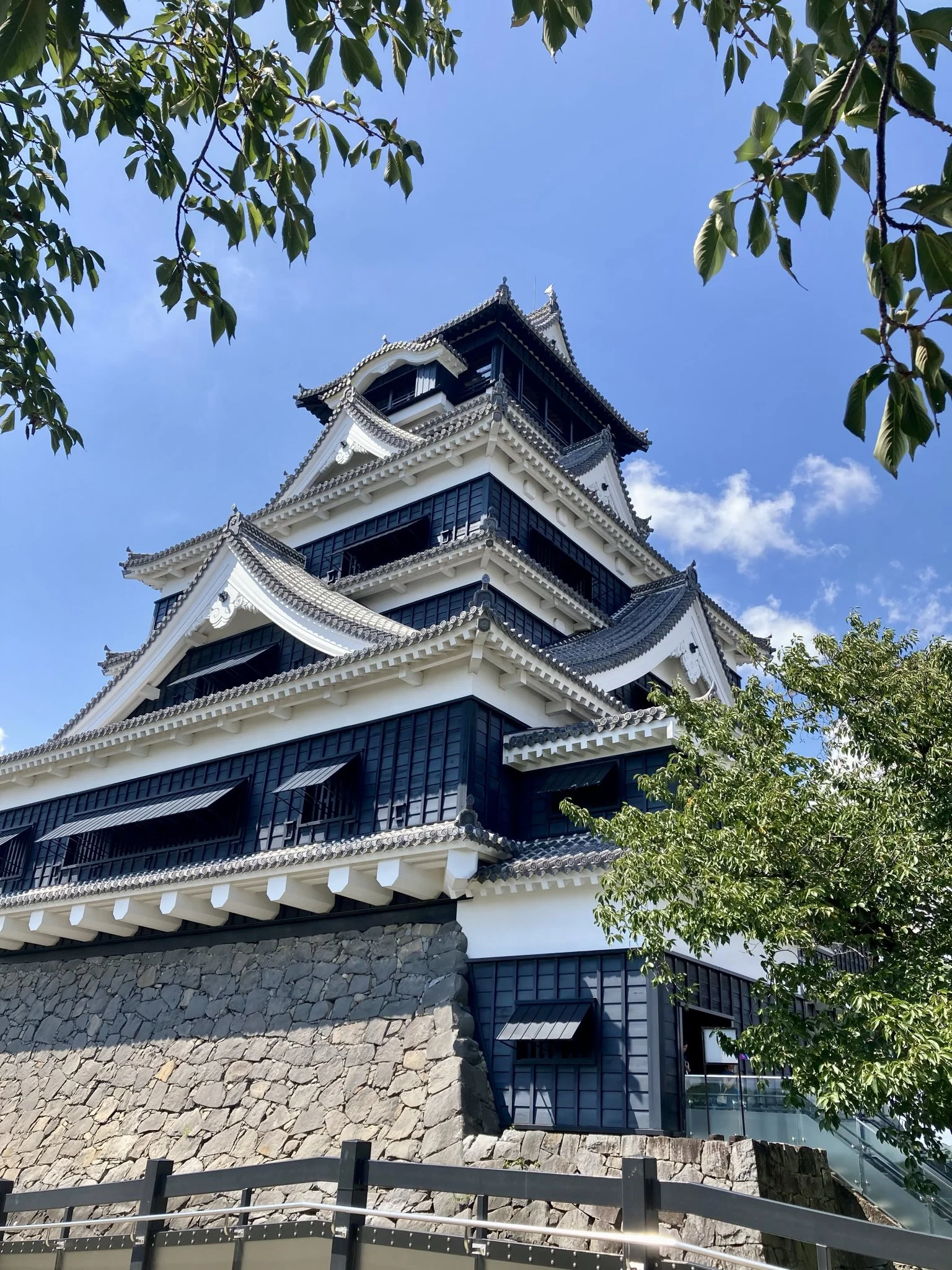
Built by Kato Kiyomasa, Kumamoto Castle is one of Japan’s most impressive defensive castles. This guide follows the feel of an actual visit, from the dry moat and main enclosure approach to the restored keep area and multilingual museum support.
Tap a button to hear the section.
Overview
Overview
Kumamoto Castle was built by Kato Kiyomasa between 1601 and 1607 and is widely regarded as one of Japan’s finest defensive castles. Its steep stone walls, broad compounds, and carefully layered layout show how seriously defense was built into the design. The castle suffered major damage in the 2016 Kumamoto earthquakes, but restoration and public reopening have continued step by step. That means a visit today is not only about historic architecture, but also about seeing a major cultural landmark in the process of recovery. It is one of the most important castles in Kyushu and one of the clearest places to understand how military engineering and modern restoration meet in the same space.
Access
Access
Kumamoto Castle is easy to reach by public transportation. It is about a ten-minute walk from either Hanabatacho tram stop or Kumamoto Castle and City Hall tram stop, and it is also within walking distance of the Sakura-machi Bus Terminal. The route you choose changes the atmosphere of the visit, because the castle has multiple approach areas including the Ninomaru side and the Josaien side. In summer, the heat can be intense, and the open spaces and stone surfaces reflect sunlight strongly, so water and comfortable shoes are highly recommended. If you arrive after crossing Kyushu by car from the east, the scale of the castle rising above the city feels especially striking.
Parking
Parking
If you come by car, several official parking areas are available, including Ninomaru Parking, Sannomaru First Parking, Sannomaru Second Parking, Miyauchi Parking, and the Sakura-no-baba visitor parking area. Since April 1, 2026, the official site notes revised parking hours and fees, so checking the latest information before your visit is recommended. These parking areas also make it easy to combine the castle with Josaien and the wider city center. For a multi-day castle trip, staying overnight in central Kumamoto works well as a base before moving on to nearby sites the next day.
Highlights
Highlights
One of the best places to feel Kumamoto Castle’s defensive power is the dry moat on the approach from Ninomaru toward the main enclosure. Walking there makes it easy to understand why the castle is praised as such a formidable fortress. Inside the keep area, you will often notice many international visitors. For them, and for overseas travelers in general, the official Kumamoto Castle app is especially useful. According to the official castle site, it offers audio and subtitle support for permanent exhibition content in Japanese, English, Mandarin, Cantonese, and Korean, and free Wi-Fi is available for downloading the app inside the keep. The restored keep area, the stone walls, and the ongoing recovery work remain the core highlights, but using the castle from an international visitor’s perspective adds another layer to the experience. It also leaves a strong impression as a gateway for further travel toward Amakusa and the western coast of Kyushu.